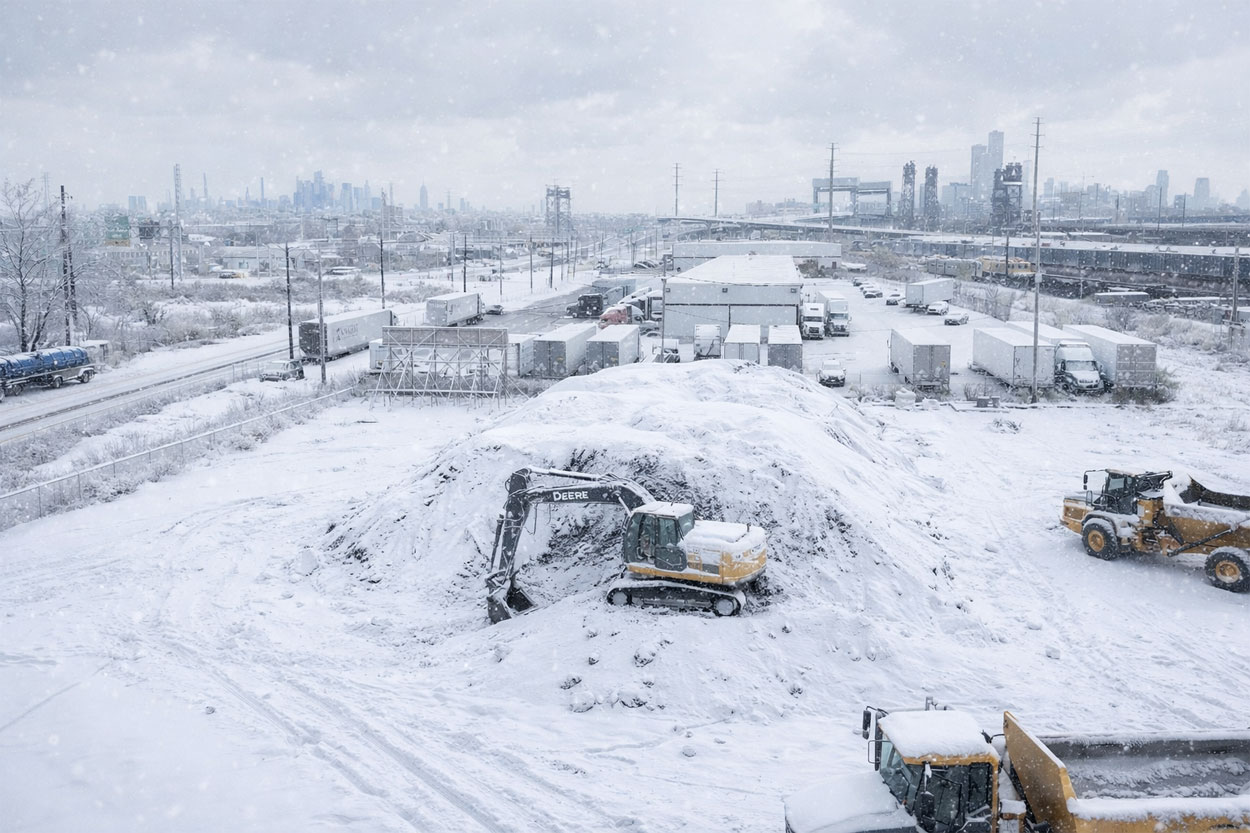
With so much work being performed in the Northeastern, Middle Atlantic and Midwestern states, it’s mission critical to be prepared for cold to extreme cold conditions on remediation sites. There are multiple areas where this comes into play.
Personnel Safety
In our industry, we often think of safety based on the hazardous materials that we encounter and handle, which is the crux of the OSHA Hazwoper training requirement. However, many incidents are based on general construction and mechanical work, including heat- and cold-related conditions. A few tips for protecting personnel in cold conditions are:
- Educate our employees on how to prevent, recognize and respond to Cold-Related Stress symptoms.
- Encourage frequent strategic breaks based on conditions that account for temperature, precipitation and wind chill.
- Provide cold weather PPE (insulated gloves, hand warmers, glove liners, traction cleats, etc.)
Pumps and Equipment
On any remediation project, you are likely to be utilizing various pumps, compressors, pressure washers and, of course, earth-moving or drilling equipment. All it takes is for one unit to freeze up or go down, and the entire crew may be unproductive and potentially lose the day.
- Store equipment with eco-friendly antifreeze every night.
- Wherever possible, store inside and out of the wind.
- Install heat trace cable for pipes and hoses and immersion heaters in tanks when possible.
- Preplanning (forecast, weather changes, alternate routes, etc.)
- Consider having a heating station with an outdoor space heater wherever possible.
- Have a backup source of equipment whenever feasible.
Water and Groundwater
While we try to avoid picking a fight with nature when we can – by adjusting work sequences, hours of operation, or just pushing work into a better part of the calendar – circumstances sometimes demand working in sub-freezing temperatures. Water management can be a tricky part of any project, weather issues aside, but managing water – in tanks, pumps and lines – when it’s cold is especially challenging and requires extra planning, equipment and time. Freezing in equipment can lead to costly damage, unsafe work conditions, and for remediation work, unintended contamination. AWT uses a combination of strategies:
- Insulation – Personnel aren’t the only things we protect from the cold by donning insulation. Tanks, lines and equipment can be insulated and/or installed in insulated structures such as trailers, tents and boxes to keep cold and wind out and keep temperatures in. Insulation can be man-made jacketing but sometimes is as simple as excess soil or mulch that strategically protects equipment holding water.
- Heating – AWT uses a variety of ancillary equipment to help keep temperatures in equipment and lines above freezing. These include electric heating cables, heating pads, tank heaters and area heaters. These are typically used in conjunction with some form of insulation.
- Specialty Equipment – Many experienced contractors provide packaged water and groundwater pump and treatment equipment that incorporate pre-built systems in weatherproof, climate-controlled containers that can be deployed on projects for construction dewatering, water transfer, and water treatment in sub-freezing temperatures. These typically are packaged to handle up to a certain flow rate and therefore can be limited for larger projects but offer efficient alternatives to many weather-related water management problems.
- Power Supply – Along with additional protective equipment comes additional power demand. This can be supplied by tapping on-site sources, if available, or using a temporary power generating source like a generator or battery pack. For small systems, the latter can be recharged with vehicles and even solar equipment.
Remediation Products
Many sites involve treating contaminants on site, including in-situ, with various remediation products. These products vary in nature and have different freezing points and function optimally at various temperatures and pressures.
- Typically, we offer optional pricing for injections that need to be performed in the winter where temperatures are constantly at or below freezing that allow us to provide a heating station for the water to be utilized in the injection process.
- Many of the remedial materials perform better in terms of deliverability when prepared in water with temperatures over 60 degrees. That said, too warm, and we may see reactions initiating prematurely so there is a line we have to walk.
- The heating system utilized Is set up in an enclosed trailer to protect the heating equipment. Holding water in the cold is a most difficult task, so our heating systems are designed as inline systems, heating water as needed prior to mixing the water with a remedial material.
- If bulk water must be brought into the site for the injection, storage tanks are wrapped and a high-flow pump is utilized to maintain flow.
AWT is and remains prepared to tackle all weather and other challenging conditions on site remediation projects. After four plus decades of experience, we have seen every possible circumstance that requires such adaptations, and we are prepared to support your next project.
Contact us at 800-732-7701 or visit Contact AWT.