Bringing a stalled environmental project back online requires more than technical capability. It demands adaptability, coordination, and a strong understanding of field conditions to move from partial construction to full system operation.
Project Overview
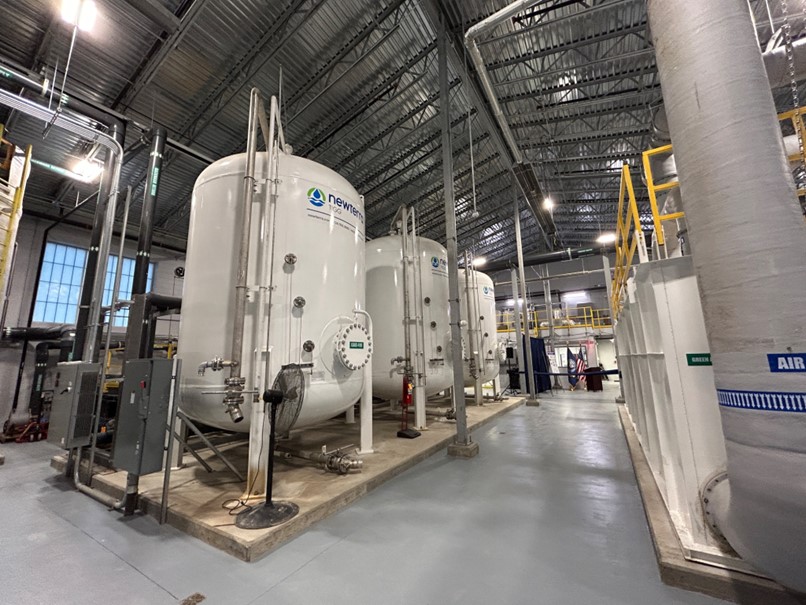
On Long Island, a large-scale groundwater remediation effort was brought back to life through strategic execution and disciplined fieldwork. AWT Environmental partnered with Insight Environmental Engineering & Construction, Inc. (IEEC) to complete Phase II of a 2,100 gallons-per-minute groundwater extraction and treatment system (GWETS).
The project, valued at $5.13 million, had been inactive for nearly two years following the termination of the original general contractor. Restarting a partially completed system of this scale required careful evaluation and a disciplined approach to execution.
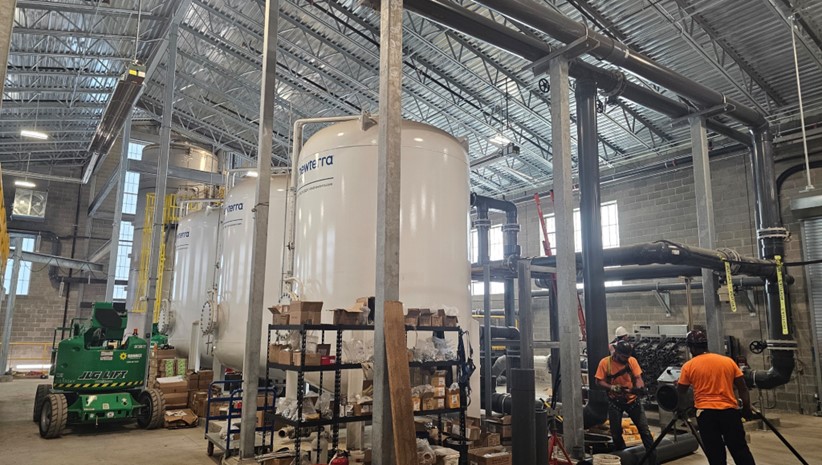
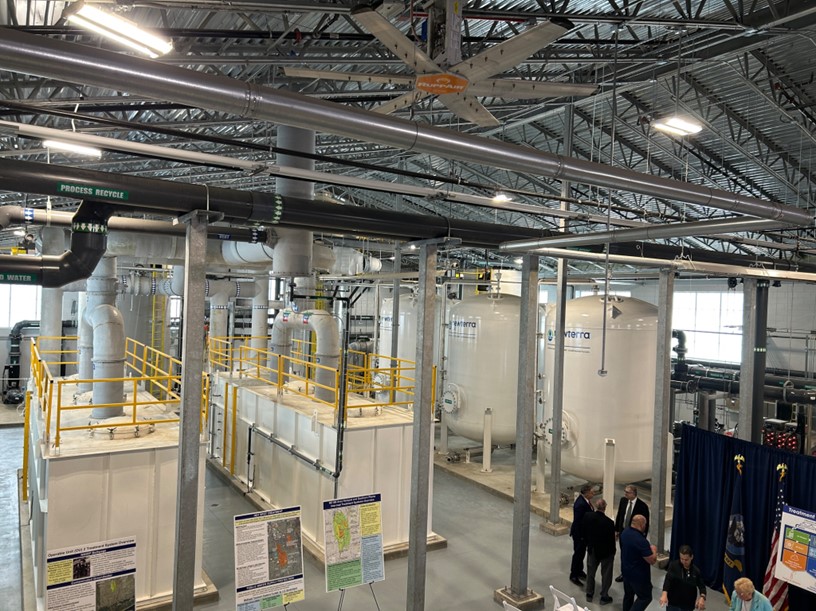
The GWETS was designed to treat a complex groundwater plume impacted by volatile organic compounds (VOCs) and 1,4-dioxane. The treatment process included:
- Influent equalization
- Air stripping
- Sediment filtration
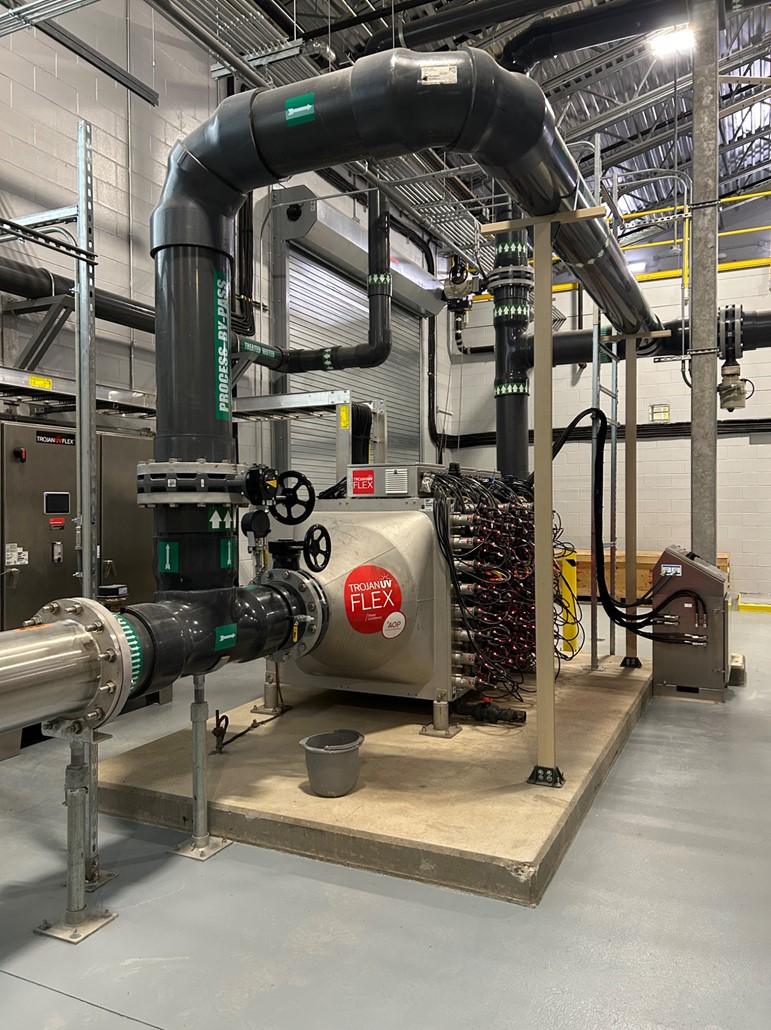
- Advanced oxidation
- Carbon adsorption
AWT’s role focused on completing and integrating the infrastructure required to bring the system into full operation.
Scope of Work
AWT’s scope included both mechanical system completion and major site and building work. The AWT Systems Division led process installation and integration, while the Remediation Division executed key civil components.
Mechanical and process installation included:
- Installation of over 1,400 linear feet of Schedule 80 PVC piping (2-inch to 12-inch diameter)
- Installation of 220+ linear feet of fiberglass reinforced polymer (FRP) off-gas ductwork (20-inch to 30-inch diameter)
- Completion of the air stripper tower, including a 10,000 CFM blower
- Installation and integration of the advanced oxidation process (AOP) system
- Implementation of a hydrogen peroxide storage and feed system with independent controls integrated into the plant PLC
Civil and infrastructure work included:
- Installation of a stormwater drainage system
- Construction of two 15-foot-deep dry wells using slide rail shoring
- Installation of approximately 8,600 linear feet of fiber optic communication lines connecting three remote well sites
Equipment commissioning included:
- Mounting and commissioning of ten process pumps
- Reconditioning and testing of pumps that had been idle for nearly two years
- Coordination with manufacturers to ensure proper startup and operation
Project Management and Coordination
Effective coordination was critical given the project’s history and complexity. AWT managed a team of thirteen subcontractors across multiple trades to complete the project. Subcontractor scope included:
- Electrical
- Plumbing
- HVAC
- Fire suppression
- Masonry and painting
- Fencing, landscaping, curbing, and paving
Resuming a partially completed project required careful assessment and sequencing. Key project management priorities included:
- Evaluating existing installations for integrity and compatibility
- Inspecting and rehabilitating idle equipment
- Coordinating system integration across multiple vendors and manufacturers
- Synchronizing the AOP system with the plant’s PLC controls
- Managing installation across both public roadways and private property
Consistent communication and structured planning allowed the team to maintain progress while addressing field challenges in real time.
Results and Conclusion
Despite the challenges associated with restarting a dormant project, AWT successfully delivered a fully operational groundwater treatment system. Key outcomes included:
- Completion of all major mechanical and civil installations
- Successful commissioning of pumps and treatment processes
- Full system startup and shakedown
- Restoration of treatment capacity at 2,100 gallons per minute
The completed GWETS now provides a robust, multi-barrier treatment approach capable of addressing both VOCs and 1,4-dioxane.
This project demonstrates the importance of strong field execution in environmental construction. By focusing on implementation, coordination, and problem-solving, AWT transformed a stalled project into a fully functional remediation system that supports long-term groundwater protection.