Project Overview
AWT Environmental was recently engaged to perform in situ remediation at a redevelopment site in Gowanus, Brooklyn. The goal was to address soil and groundwater impacts tied to VOCs and sVOCs while keeping pace with active construction. The first injection event took place from March 10 through March 13, with a second event scheduled to follow as part of a phased treatment approach.
Site Conditions and Objectives
The treatment area covered roughly 2,100 square feet and targeted known areas of concern identified through prior borings and monitoring wells. Subsurface conditions included urban fill to about 10 to 12 feet below grade, followed by sandy silts with intermittent clay, and denser clay layers between 25 and 30 feet.
The objective was clear: reduce contaminant concentrations within a defined treatment zone to support ongoing site redevelopment. This required precise delivery of oxidizing amendments at depth, while working within the constraints of an active job site.
Scope and Methodology
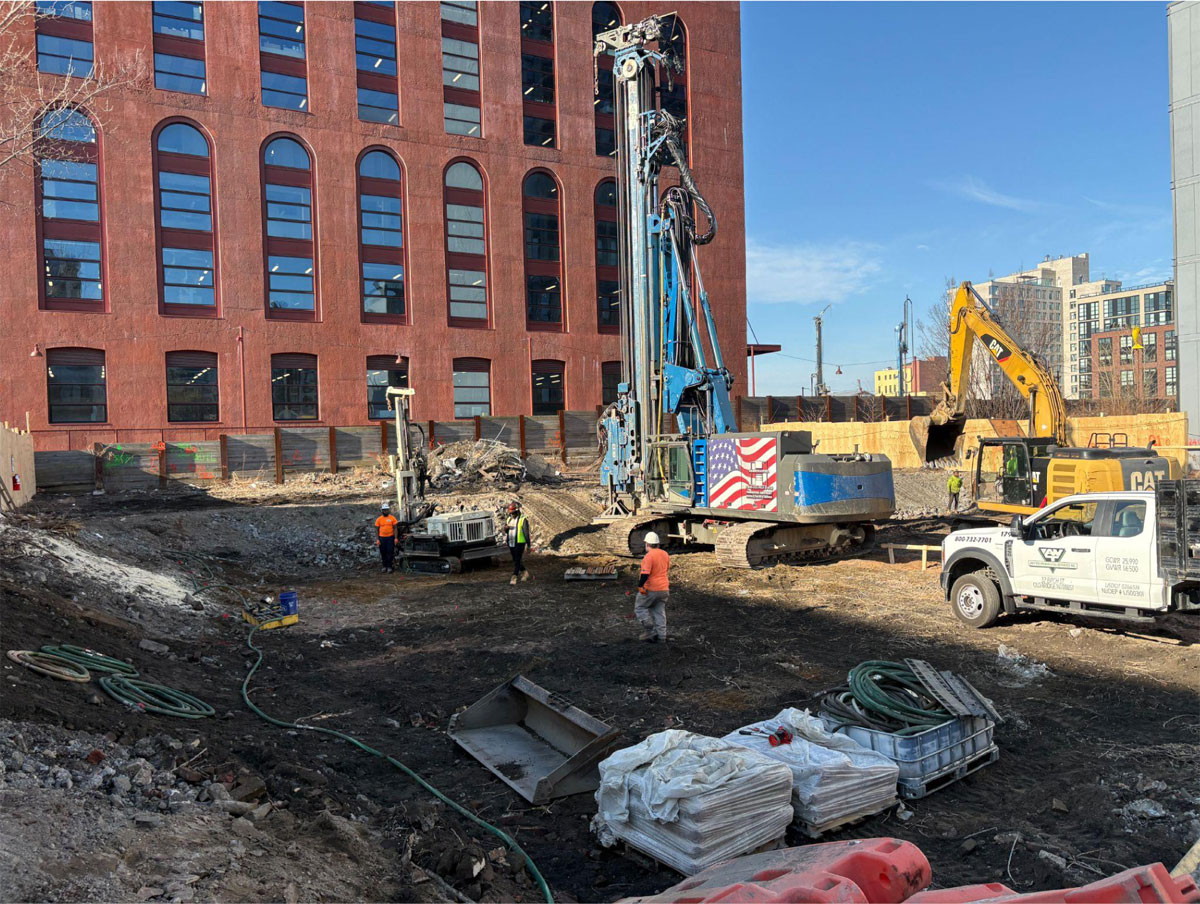
AWT coordinated ground penetrating radar to confirm subsurface conditions before mobilizing equipment. The team installed 18 temporary injection points using a Geoprobe 7822 direct push rig. Each location targeted a 10-foot interval between 20 and 30 feet below grade.
The injection process involved delivering and blending PersulfOx® and RegenOX® Part A, followed by controlled subsurface injection using diaphragm pumps and a mobile mixing system. The layout of the injection grid was designed to address contaminant exceedances while maintaining flexibility for field adjustments.
Execution in an Active Construction Environment
This project required close coordination with multiple trades operating on site, including pile-driving crews, excavation teams, surveyors, and tree removal contractors. AWT held daily check-ins to align work areas, sequencing, and safety protocols.
Access and staging were not static. The injection and blending area had to be relocated twice to accommodate shifting construction activity. Despite these changes, the team maintained progress by adjusting setups quickly.
Challenges and Field Adjustments
Several factors added complexity to the work. Freezing conditions affected operations and required careful handling of materials and equipment. Subsurface conditions also influenced injection performance, with tighter lithology reducing flow rates in certain areas.
An unplanned pause occurred on the second day to allow for removal of a nearby tree within the treatment zone. This extended the schedule by one day but ensured safe access to the full injection area.
AWT also managed a fast turnaround from proposal to mobilization, coordinating equipment, materials, and personnel on short notice to meet the customer’s timeline.
Equipment and Execution
The project relied on a combination of specialized equipment, including a mobile injection mixing truck, diaphragm pumps, and the Geoprobe 7822 rig for direct push installation. Oxidant amendments were delivered to the site by AWT’s hazmat-certified driver as part of mobilization.
The field team worked together to execute the injections and adapt to site conditions in real time.
Results and Key Takeaways
The first injection event was completed with all 18 points installed and treated within the target interval. Adjustments to staging, coordination with other trades, and responsiveness to site constraints allowed the work to proceed without disrupting broader construction activity.
This project highlighted AWT’s ability to operate within active development sites where conditions shift daily. Clear communication, flexible setups, and a practical approach to field challenges ensured that remediation stayed aligned with the customer’s schedule and objectives.