For more than three decades, the Toxicity Characteristic Leaching Procedure (TCLP) has played an important role in determining whether certain solid wastes exhibit the toxicity characteristic under the Resource Conservation and Recovery Act (RCRA).
EPA is now taking a closer look at that framework.
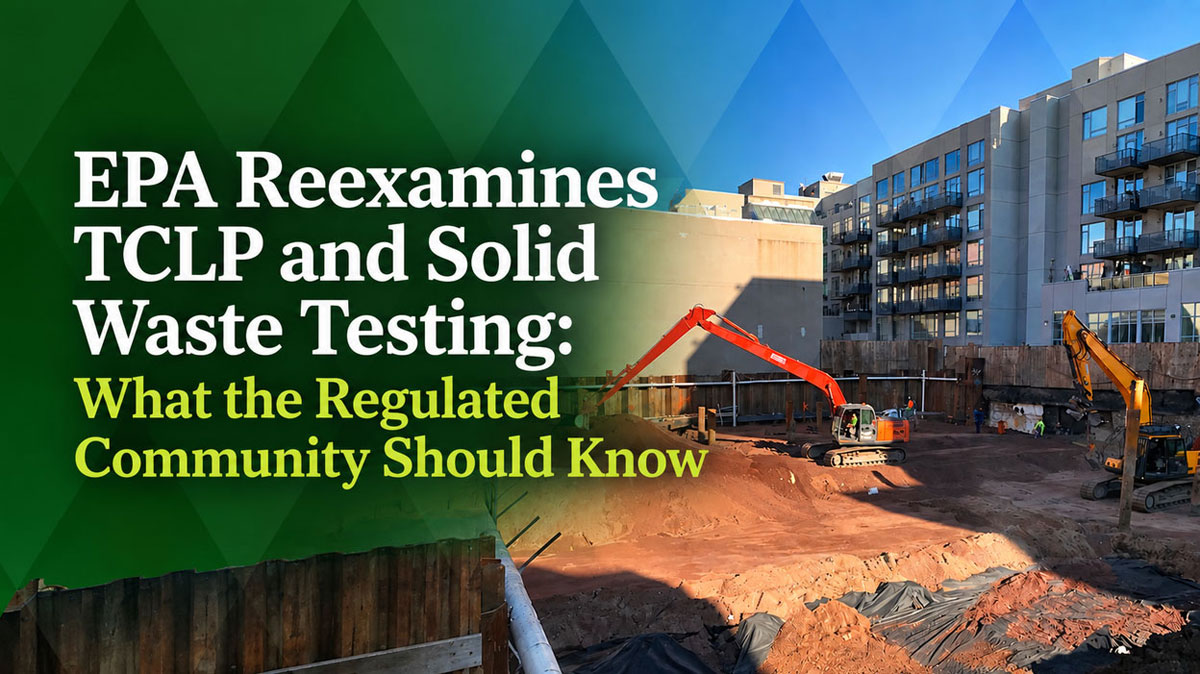
In September 2026, the U.S. Environmental Protection Agency issued a Request for Information (RFI) seeking input on several aspects of solid waste evaluation, including TCLP Method 1311, waste sampling practices, and other SW-846 test methods.
What is TCLP?
TCLP is designed to estimate the potential for certain contaminants to leach from a waste under specified conditions. The resulting extract is analyzed for regulated constituents and compared with the regulatory concentrations established under 40 CFR 261.24.
For generators, environmental professionals and waste management companies, TCLP results can have significant implications. A waste that exhibits a toxicity characteristic may be regulated as hazardous waste, affecting its handling, transportation, treatment and disposal requirements.
What is EPA considering?
EPA has not announced a replacement for TCLP or changed the existing hazardous-waste thresholds.
Instead, the Agency is seeking information about how the existing system works in practice and whether portions of it should be updated.
Among the subjects EPA is examining are:
- The representativeness and consistency of waste sampling practices.
- Practical challenges associated with TCLP Method 1311.
- Opportunities to improve or streamline TCLP procedures.
- The potential role of alternative leaching methods in certain applications.
- Broader improvements to EPA’s SW-846 analytical and sampling framework.
One issue receiving attention is the context in which TCLP is used. TCLP was originally developed to simulate contaminant leaching associated with a particular waste-disposal scenario. Today, the method is applied to a wide range of wastes and environmental projects, including contaminated soils generated during remediation and construction activities.
EPA has also developed additional leaching approaches, including methods within the Leaching Environmental Assessment Framework (LEAF), that evaluate contaminant release under a broader range of environmental conditions.
Why does this matter to the regulated community?
Any future changes to waste sampling or leaching-test requirements could affect several parts of the waste-management process.
For generators and environmental professionals, those impacts could include waste characterization programs, sampling plans and laboratory analytical requirements. For transporters and disposal facilities, changes could influence waste profiling and facility acceptance procedures.
Ultimately, changes to testing requirements could also affect project schedules, analytical costs and disposal options.
For now, however, the existing TCLP requirements remain in place.
EPA’s current action is an information-gathering process. The regulated community should therefore distinguish between EPA’s current request for information and any future regulatory or technical changes that may result from it.
The comment period also provides generators, laboratories, environmental consultants, remediation contractors, disposal facilities and other stakeholders an opportunity to provide EPA with information about their practical experience using these methods.
AWT Environmental Services will continue monitoring EPA’s review and any subsequent changes to SW-846, TCLP and solid waste characterization requirements that may affect our clients and the regulated community.
This information is provided for general informational purposes and is not intended as legal or regulatory advice.